Mary I (Bloody Mary)


Mary I, queen of England, was born on February 18, 1516, in Greenwich Palace in London, England. Her father, Henry VIII, of the House of Tudor, had also been born at Greenwich on June 28, 1491. Mary was the fifth child of Henry and his first wife, Catherine of Aragon.

Although there was jubilation at Greenwich at Mary’s birth, Henry VIII was disappointed in that Catherine of Aragon had failed to deliver a son. Mary would be the only one of Catherine and Henry VIII’s children who would live to adulthood. In an age when monarchs were preferably men, young Mary’s purpose diplomatically was to secure a strategic nuptial alliance for her father.

In Henry VIII’s eyes, the only way to secure the throne in the Tudor family—and to make it a true dynasty—was to have a male son who would succeed him as king. Consequently, Henry began his quest to divorce Catherine of Aragon to marry again in the hopes of producing a male Tudor heir.


However, to assure the succession of the Tudors to the throne, Mary was recognized by her father as princess of Wales, which meant that, should her father die without male issue, she would succeed him as Queen Mary I.

In the end, Henry had his marriage to Catherine of Aragon dissolved, and he wed his mistress Anne Boleyn, who was crowned queen of England in 1533. Pregnant at the time of her marriage to Henry, she gave birth to the princess Elizabeth, the future Elizabeth I, in September 1533. Still the king determined to have his way in all things, Henry was frustrated in his pursuit of a male Tudor heir.

In 1534, Henry had Parliament pass the Act of Supremacy, which made him the head of the Roman Catholic Church in England, known as the Church of England. As far as Princess Mary was concerned, she was placed in almost double jeopardy, because she still held out for her mother and for the Catholic Church.

Entry of Queen Mary I with Princess Elizabeth into London in 1553

Boleyn was her bitter enemy, especially after the birth of Elizabeth as Mary’s rival for the throne, and it was feared that Boleyn would demand Mary’s execution. Finally, under the entreaty of the king’s chief minister, Thomas Cromwell, Mary assented to the Act of Supremacy.

When Anne Boleyn was executed for adultery in May 1536, much of the danger passed for Mary. Henry’s next wife, Jane Seymour, finally provided a male heir, Edward VI, in October 1537. Seymour began a reconciliation with Mary, who still had a spot in her father’s heart as his “chiefest jewel.”

Tragically, Jane would die soon after childbirth and Edward would only rule from 1547 to 1553, at which time Mary became queen. When Mary ascended the throne in July 1553, she trod lightly at first on the issue of religion, not wishing to shake England by revoking the Act of Settlement and the new order that had come with it.


However, Mary did have Henry’s divorce from her mother declared invalid, legally making Elizabeth a bastard. The half sisters carried on harsh competition for a rightful claim to the throne. Elizabeth was implicated in two plots against Mary, one led by Sir Thomas Wyatt in 1554 that caused Elizabeth to be sent temporarily to the Tower of London.

Eventually Mary’s affection for the Catholic Church brought personal disaster. In November 1554, Reginald Cardinal Poole brought from the Vatican the terms by which Rome would accept England back into the church—all those who had carried out the Act of Settlement must be judged as heretics and condemned to execution. Almost 300 would be executed, including Thomas Cranmer, archbishop of Canterbury, who had also approved of the divorce of Henry VIII from Catherine.

Mary sacrificed the affection of her people, not a few of whom had supported her during her years of exile. She compounded her error by marrying Philip II of Spain in July 1554. Mary’s legacy in England included the loss of Calais to France’s king Henry II in January 1558. It was the last possession England had left in France from the Hundred Years’ War.

Indeed, there is much reason to think that Philip only wed Mary to draw England into the enduring feud between Spain and France, hoping to tip the balance in favor of Spain. Plagued by ill health and foreign adventures, Mary I died in November 1558. Before her death, she had provided that Elizabeth would succeed her on the throne as the rightful queen.

Mary, Queen of Scots


The queen of Scotland from 1542 until 1567, Mary was born on December 8, 1542, at Linlithgow Palace, Scotland, the only child of King James V of Scotland, who died six days after she was born.

When Mary was five, her French mother, Mary of Guise, sent her to the French court, where she lived for many years. Being extremely attractive, she caught the eye of Francis, the eldest son of King Henry II of France. They were married, and when Henry died in 1559, Mary became the queen consort of France.

In 1558, following the accession of Elizabeth Tudor, as Mary’s grandmother was a sister of Henry VIII, the father of Elizabeth, Mary became the heir to the English throne.


However, some English Roman Catholics felt that Elizabeth was illegitimate, as they regarded Henry VIII’s divorce from his first wife, Catherine of Aragon, as invalid, as was his subsequent marriage to Anne Boleyn, Elizabeth’s mother. Thus, Mary was queen of Scotland and the queen consort of France and had a disputed claim to the throne of England.

After Mary’s first husband, Francis, died, and she became isolated at the French court, Mary decided to return to Scotland. There she had great difficulty in trying to reconcile the various court factions.

Her illegitimate brother, James, earl of Moray, tried to help, and Mary, a Roman Catholic in a country that had been officially proclaimed a Protestant nation during her absence in France, initially embarked on a policy of religious tolerance.

In July 1565, Mary married Henry Stewart, earl of Darnley, a cousin. He was handsome, had his own claim to the throne of England, but was foolish and quickly alienated many at the Scottish court by his irresponsible and wanton behavior. In March 1566, Darnley, jealous at Mary’s reliance on advice from her secretary, David Rizzio, stormed into the royal apartments and with others stabbed Rizzio in front of the queen.

Three months later the son of Mary and Lord Darnley, James, was born. However, Mary hated Darnley for what he had done to Rizzio and may have started having an affair with James Hepburn, fourth earl of Bothwell. She certainly came to trust Bothwell.

It was not long afterward that Lord Darnley was killed while recovering from an illness; his house was blown up and his strangled body was later found in the garden. Soon afterward, Mary married Bothwell, but this started a major Scottish rebellion against the pair.

Mary was formally deposed as queen, with her infant son proclaimed king. She fled to England; Both-well went overseas. Over the next 18 years, she was held in custody in England. Some English Catholics started conspiring with her, and in 1586 she was found to have been involved in a rebellion against Queen Elizabeth. Tried by an English court, she was sentenced to death and was executed on February 8, 1587, at Fotheringhay Castle.

Maryland

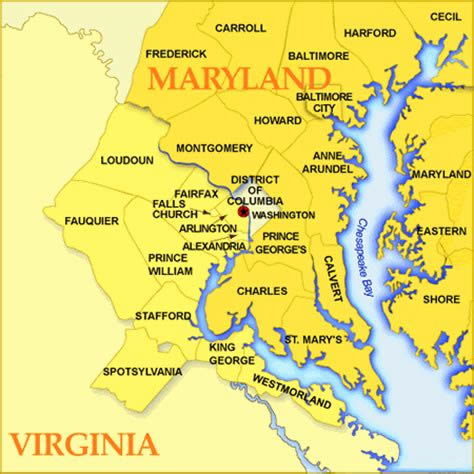
Map of Maryland

Maryland was chartered in 1632 as a refuge for English Catholics, although the colony’s religious mission was ultimately undermined by internal disputes. As did neighboring Virginia, colonial Maryland maintained an economy based on tobacco and bound labor.

Since the Reformation, Roman Catholics in England had faced persecution. Wanting to provide a place where they could worship freely, George Calvert, the first Lord Baltimore, envisioned an American haven for Catholics. Baltimore was a recent convert to Catholicism and had previously invested in several colonization schemes.

In 1632, King Charles I granted Baltimore’s request and issued a charter for a colony in the upper Chesapeake. The king was sympathetic to the plight of Catholics and Maryland was named in honor of his Catholic wife, Henrietta Maria. Unlike previous charters, Maryland’s named Baltimore and his heirs “absolute Lords and Proprietors,” essentially giving the Calvert family total control over the colony.


English colonists first reached Maryland in 1634, settling on the north side of the Potomac River at St. Mary’s City, the colony’s first capital. Within the first decade, settlers began erecting tobacco plantations and importing indentured servants to work them. The colonists established an elective assembly in 1638, although the governor and governor’s council were appointed by Lord Baltimore.

Economic success ensued, but religious tensions threatened the colony’s stability. Maryland had attracted both Protestants and Catholics from the start, although Baltimore gave the best lands to Catholic gentlemen and appointed Catholic governors and councilors.

In contrast, Protestants came over largely as indentured servants and were shut out of the political process. Inspired by the English Civil War, Protestant colonists seized control of the colony in 1644 in what was termed “the plundering time.”

Hoping to prevent future confrontation, Baltimore granted An Act Concerning Religion in 1649, guaranteeing that no person “professing to believe in Jesus Christ” would be “any ways troubled, molested, or discountenanced.” The first American law to ensure religious liberty, the act was intended to preserve the rights of Catholics, who had already become a minority in their own colony.

Religious strife continued nonetheless. During the Glorious Revolution of 1689, Protestants led by John Coode again seized the colony. This time, the Calverts did not regain control until 1715, when the family converted to Protestantism.

During the interim, the colonial assembly established the Anglican Church and barred Catholics from owning firearms and holding office. Thereafter religious conflicts abated as the population and economy diversified. In the late 17th century, African slaves replaced servants and became an important minority in the colony, constituting a third of Maryland’s population at the revolution.

In the northern counties, iron foundries were established and wheat farming appeared in the 1740s. Annapolis became the capital in 1694 and soon grew into a center of culture, boasting a newspaper, academy, and several clubs by the middle of the 18th century.

To the end of the colonial period, Catholics remained an important minority in Maryland. When the Maryland delegates signed the Declaration of Independence in 1776, one of the signatures belonged to Charles Carroll of Carrollton, a Catholic.

Mary Tudor (Mary of France)

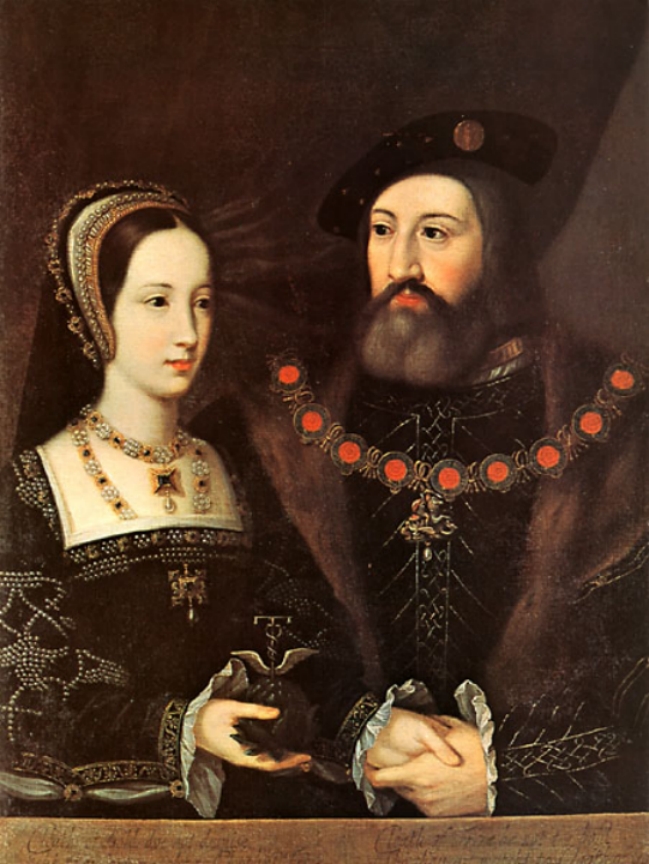
Mary Tudor and Charles Brandon

Mary Tudor was born in 1496, nine years after her father, Henry VII, had become king of England by defeating Richard III at Bosworth in 1485. Mary Tudor is often confused with Mary I, who was queen of England from 1553 to 1558, and with Mary, Queen of Scots. However, Mary Tudor, the daughter of Henry VII, would be queen in her own right.

Mary was born in the age of great dynastic marriages when a king contracted for marriage of his daughter to benefit his kingdom. Mary was at first intended to wed Charles of Anjou, who would later become Charles V, the most powerful European monarch of his time.

The contract, originally made by Henry VII, was renewed on the October 17, 1513, by Henry VIII at a meeting with Margaret of Savoy at Lille, with the wedding being set for the following year.


But the Emperor Maximilian I, to whom Louis XII had proposed his daughter Renée as wife for Charles, with Brittany as a dowry, postponed the match with the English princess in a way that left no doubt of his intention to withdraw from the contract altogether.

Henry VIII succeeded to the throne when Henry VII died in April 1509. When it came time to renew the marriage agreement with Charles of Anjou, it was King Henry VIII who did so. With the customary determination of his younger years, Henry decided to invade France in June 1513 as a forceful demonstration of English might.

Henry joined the Holy League against France and went to war. While he was involved in France, his brother-in-law James IV of Scotland, who was married to his sister, Margaret Tudor, invaded the north of England. However, Henry had left the capable Thomas Howard to face any threat from Scotland. James IV was defeated and killed at Flodden on September 9, 1513.

The victories at the Spurs and Flodden made both France and the Holy Roman Emperor reconsider the marriage plans of Mary Tudor. Obviously, Henry had proved it was not wise to have him as an enemy. A diplomatic settlement was reached.

Cardinal Thomas Wolsey contracted for Mary to wed King Louis XII. His queen, Anne of Brittany, had died in 1514, making him a desirable spouse for Mary. The two were wed on January 1, 1515, but Louis XII died three months later.

Mary had developed an intense love for Charles Brandon, duke of Suffolk. His marriage to Margaret Neville Mortimer had been annulled, and his second wife, Anne Browne, died in 1512. At the time of the Battle of the Spurs, he was engaged to an orphan girl.

Henry VIII knew about the love between Charles and Mary. Moreover, Francis I learned of it when Mary told him of her true feelings when he attempted to marry her off to one of his relatives. As Louis XII’s widow, Mary had become a valuable diplomatic asset to Henry again, and she feared that he might try to marry her to another royal suitor.

Mary was determined she and Charles would not be parted. In February 1515, they were married in Cluny Chapel in France. In May 1515, as a mark of royal favor, the couple was wed a second time in England; Henry VIII and his queen, Catherine of Aragon, were the guests of honor. For the time, peace between France and England was maintained. Mary Tudor died on June 26, 1533.

Massachusetts Bay Colony

Massachusetts Bay Colony

In the early 17th century, England began acting on its imperial ambitions by chartering business organizations called joint-stock companies, which undertook the actual work and expense of spreading England and its institutions around the world. The system had created the colony of Jamestown, Virginia, and the Council for New England, under the leadership of Sir Ferdinando Gorges.

During the 1620s, one of the council’s patents went to some Dorchester merchants to develop a fishing industry at Cape Ann on the New England coast. By 1626, the effort had failed, although John White, a Puritan minister in England associated with the project, began to see the enterprise as a potential refuge for discouraged Puritans from England.

Unfortunately for White and a group of fellow Puritans who had joined him, the Council for New England had ceased effective operation, and the group instead applied directly to the government for its own charter for the lands it already held. The charter, for a company called The Governor and Company of the Massachusetts Bay in New England, was issued in March of 1629.


The company was to be managed by a governor and a council of 18 assistants, who were to be elected by a General Court of investors, which also had the power to legislate for the company. Not part of the charter was the usual requirement that the company conduct its business meetings in England.

This omission, quite possibly done by design, allowed the company to hold its meetings wherever it chose. In late August of 1629, in what is known as the Cambridge Agreement, the company opted to move its operations, including the charter, to New England.

When control of the company quickly passed into the hands of dedicated Puritans willing to leave England, the company started its transformation into a colony. By late 1629, the company had sent out John Endicott to assert its control over a settlement at Salem and had then supported that effort with five more ships and possibly one hundred additional settlers.

City Upon a Hill

Thus, by April of 1630, when a flotilla of 11 ships left England, the Massachusetts Bay Company was already a significant presence on the New England coast, and its conversion into a full-fledged colony assured. John Winthrop, elected the company’s governor, established the character of early Massachusetts in a sermon preached at the outset of the journey.

He stressed that the colony would be created as a covenant with God, and that religious orthodoxy would be maintained by the merging of civil and ecclesiastical power and consolidated in the hands of the colony’s leaders. His reference to Massachusetts as a “city upon a hill” to serve as an example to England of what God intended for his people further solidified the religious nature of the proposed colony.

Massachusetts bay colony map

There is no question about the success of the enterprise. The Company of the Massachusetts Bay was indistinguishable from what came to be called simply the colony of Massachusetts. And the religious nature of the colony was secured by requiring that only male church members could vote in colony elections.

There were challenges to some aspects of the colony from Roger Williams, Anne Hutchinson, Quakers, and the freemen of the colony who demanded an elected body to represent them, but there was never any likelihood in New England that the colony would not succeed.

But that certainty was not the case in England. Sir Ferdinando Gorges, still hanging on to the remnants of the Council for New England, argued that the colony’s charter had been secretly obtained and started a campaign to have it annulled.


To the same end in 1635, the council gave up its own charter and requested that the king reassign the disputed territory to eight members of the former Council for New England. The outbreak of the English Civil War, or Puritan Revolution, in 1640, however, prevented any of the grants except the one for Maine from being made.

By the time of the Restoration of the Stuart monarchy in 1660, Gorges had died, the Council of New England had passed from the scene, and Massachusetts had become too powerful and too independent to be easily tamed.

Control of Commerce

With the Restoration, England commenced a colonial policy that stressed the importance of commerce in the empire and the necessity of England’s control of that commerce for the greater good of the mother country.

Massachusetts viewed such a policy as interference in its self-styled independence. When England decided to oust the Dutch from New Netherland in 1664, the leaders of the expedition were ordered to investigate the situation in New England. Their report was especially critical of Massachusetts, but through delay and avoidance the colony managed to escape serious ramifications.


England tried again in 1676, when it sent over Edward Randolph. Randolph’s report was more damaging than the previous commissioners’ account, and the English government felt compelled to act.

It ordered the colony to send representatives to negotiate a settlement, but when England determined that the colony had not lived up to its agreements, it commenced legal action against the original charter as the only method whereby Massachusetts could be brought under control.

England completed the effort in 1684, and the courts annulled the original 1629 charter. The colony existed dependently until it was incorporated into the Dominion of New England in 1686. In the aftermath of the Glorious Revolution in England, Massachusetts received a new charter in 1691 as a royal colony, the Province of Massachusetts Bay.

The Puritan old guard were displeased, but by the end of the 17th century the original charter had generally outlived its usefulness, as perhaps demonstrated by the Salem witchcraft trials.

The more practical and forward-looking portion of the colonists recognized that future growth and prosperity lay with a royal charter, the institution of a property qualification for the vote, and a more cooperative relationship with English authority. Those whose ancestors had migrated as Puritans under the 1629 charter had become the Yankees of the 1691 charter. They and their colony were ready for the 18th century.

Medici Family

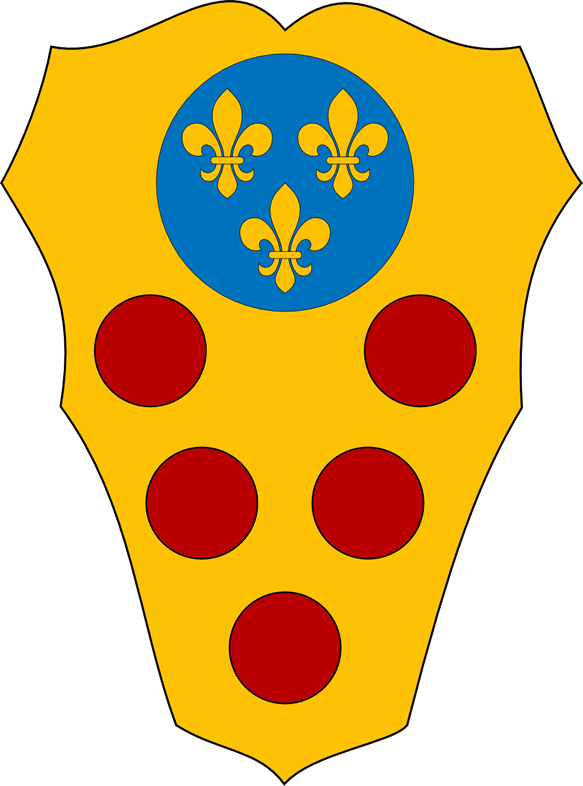
House of Medici

Salvestro de’ Medici, in the 14th century, was the first of the family to make a bid for political power when he led the revolt of the the small artisan class against the nobility who governed the city. Salvestro overbid his hand and became virtually a dictator in Florence, causing all Florentines to unite and banish him from the city in 1382.

After Salvestro’s ejection from the city, Giovanni di Bicci de’ Medici was able to restore both the family’s wealth and its social standing in the community, important in the tightly knit fabric of the Italian city-states of the period. Giovanni made the Medici the richest family in Italy, perhaps in Europe.

The Medici family became paramount in Florence due to Giovanni’s son, Cosimo the First, or Cosimo the Elder (Cosimo il Vecchio). However, at first, taking advantage of the death of Giovanni in 1429, the powerful Albizzi family banished Cosimo from Florence in 1433. Cosimo’s exile was brief.


The Florentines brought Cosimo back in triumph to the city the next year. He respected the republican character of the city and did not make an obvious grab for power. However, through his great wealth and personal ability, Cosimo nevertheless became the first citizen of Florence and the virtual ruler of the city.

Indeed, Muslim pirates, or corsairs, had been preying on Venetian shipping for some time. However, boasting one of the largest navies in Renaissance Europe, the Venetians at this time were a great power at sea.

A great shift in the Italian balance of power took place when Cosimo shifted the historic Florentine support to the rival city of Milan, where the Sforza family was fighting for supremacy. While Muzio Attendolo Sforza made his name as a condottiero (mercenary leader), it was his son Franceso who became duke of Milan in 1450 with the aid of Cosimo de’ Medici.

Portrait of Cosimo I de' Medici

Meanwhile, Cosimo was establishing himself as one of the great patrons of the Renaissance. Countless rare documents formed the foundation for Cosimo’s library; he also patronized the leading artists of his day.

Piero de’ Medici was a civic-minded ruler, as was his father, Cosimo. He already had experience in Florentine diplomacy and public affairs. He wed Lucrezia Tornabuoni, whose family had turned its back on its noble heritage.

Together, they had three daughters, Maria, Bianca, and Lucrezia, and two sons who would mold the future history of Florence, Lorenzo and Giuliano. Lorenzo was precocious and unusually gifted for his age. His father entrusted him with diplomatic missions throughout Italy.


However, within Florence, serious opposition was building to Medici rule. Luca Pitti, perhaps Piero’s chief adviser, was secretly planning to seize power. In March 1464, taking advantage of the death of Francesco Sforza, the conspirators made their plans.

When Piero was ill and left the city in August, they struck. Piero came back in force at the end of the month after Lorenzo had gathered loyal troops. The coup collapsed. Luca Pitti was pardoned; others were banished.

When Piero died in 1469, Lorenzo was the natural choice to take his place. Unlike Cosimo and Piero, he ruled more as a prince or an ancient Roman tyrant than a man of the people. At the same time, there was a chilling of relations between Lorenzo and the new pope, Sixtus IV.

The main reason was a struggle over the town of Imola, which Lorenzo wanted to gain for Florence because it guarded the strategic road from Rimini to Bologna. The pope wanted Imola as a gift for his nephew—possibly his son—Girolamo Riario. The cold feelings developing between Lorenzo and Sixtus led to the pope’s replacing the Medici as the papal bankers with the Pazzis, rivals of the Medici.

The enmity between Lorenzo and the pope, now allied with the Pazzis, led to one of the bloodiest incidents of the Italian Renaissance: the Pazzi Conspiracy. The conspiracy aimed at wiping out the Medici. The plotters knew too that Lorenzo suffered a serious weakness: His strong ally, Galeazzo Maria Sforza of Milan, had been assassinated in December 1476.

The conspirators struck on Easter Sunday, April 26, 1478, while Lorenzo and Giuliano were at mass. In the bloodbath that followed, Giuliano was stabbed 19 times, but Lorenzo escaped. In a purge that followed, many of the conspirators were killed, including five who were publicly hanged. Pope Sixtus continued his campaign to oust the Medicis from Florence.

Medici family members placed allegorically

Finally, in a bold move, Lorenzo decided to make a trip and attempt to make peace with one of Florence’s most implacable enemies, King Ferrante of Naples, in December 1479. Amazed at the Medici’s bravery, Ferrante made peace with Florence, and Sixtus’s war came to an end. Lorenzo returned to Florence in triumph. Under him, Florence entered a new era of greatness.

In January 1492, Lorenzo fell ill and died in April of that year. He was succeeded by his son Piero, who had the misfortune to rule at one of the most disastrous epochs of Italian history. King Charles VIII of France invaded northern Italy in 1494 with a large and well-equipped army.

His artillery, perhaps the most modern in Europe, destroyed Italian citadels and caused cities to surrender before he even approached them. Piero, lacking the fortitude of his father, fled Florence and died in exile.

During the next century, the rise of the family to the ranks of the Italian nobility gave proof of the singular determination of the family, and the faith of the Florentines in the Medici clan.

The Medici rise continued when Cosimo I became duke of Florence in 1537. Like Lorenzo the Magnificent, Cosimo I was young, coming to power at 18. However, like Lorenzo, he understood the art of politics but showed a ruthlessness more characteristic of a Borgia than a Medici. Cosimo I added Siena and Luca to his realm. In 1569, his rise to eminence was recognized when he became grand duke of all Tuscany.

On the death of Cosimo I in 1574, Cosimo’s son Francesco I ruled as grand duke until his death in 1587, and his rule proved to be a weak and uninspiring one. His son Ferdinand II restored luster to the Medici name. Cosimo II became grand duke in 1609 but died in 1620, never having fully recovered from a fever he had suffered in 1615. His son Ferdinand II became grand duke on his father’s death.

With the reign of Ferdinand II, the House of Medici began its period of decline. It was the misfortune of the heirs of Ferdinand II to live in the era of the rise of the European great powers. Ironically, Marie de’ Medici (Médicis) played a role in the demise of her family’s duchy. In 1600, she married King Henry IV of France, and when he was assassinated in 1610, she served as regent for her son, King Louis XIII.

In 1735, Austria and France arranged that France would take Lorraine and Austria would seize possession of Tuscany. By this time, the Medicis were powerless to defend their ancient lands. In 1737, Austrian troops entered Florence. In the same year, in July 1737, Grand Duke Gian Gastone died without a male heir at the age of 65. The House of Medici had ceased to rule in Florence.