Averroës

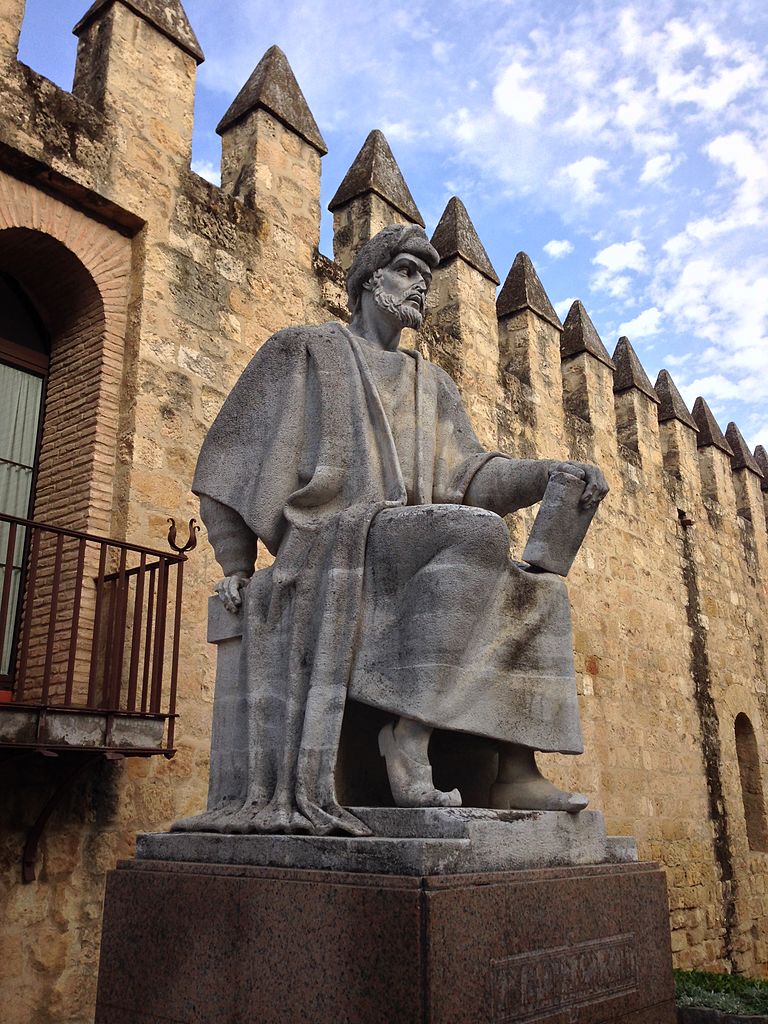
Averroës statue in Cordoba, Spain

Abu Al-Walid Muhammad Ibn Ahmad Ibn Rushd, Ibn Rushd for short, or Averroës, as he is known to the West, was born in Córdoba (Qurtuba), Spain, in 1126 to a family of distinguished Andalusian scholar-jurists. Ibn Rushd was to become a famous philosopher, theologian, physician, and royal consultant. He was a scholar of the natural sciences, namely biology, astronomy, medicine, physics, and the Qur’anic sciences.

His grandfather, after whom he was named, was a renowned chief justice (qadi) in Córdoba and an authority on Malikite jurisprudence, having written two famous books on the subject. At the same time, he was the imam of the Great Mosque of Córdoba. Ibn Rushd’s father was also a judge. Having grown up in a family of scholars, Ibn Rushd received an excellent education in Córdoba in linguistics, Islamic jurisprudence, and theology.

He became very knowledgeable in these subjects, evident through his many writings. He was especially competent in the subject of khilaf, which dealt with controversies in legal sciences. Ibn Rushd had profound knowledge of Aristotelian philosophy, possibly introduced to the subject by one of his teachers or one of the leading scholars in Córdoba.


He was educated in medicine and accomplished a major work known as the Al-Kulliyat fi‘l tibb translated as General Medicine in 1169. Ibn Rushd’s writings were so widely celebrated at one time that it was claimed that medieval Islamic philosophy was an earlier version of the European Enlightenment.

In 1153 Ibn Rushd moved to Marrakech, where he met the Almohad ruler Abu Ya’qub Yusuf, who was very impressed with the young Ibn Rushd’s intellect and deep knowledge of philosophy. It is interesting to note that Ibn Rushd was initially reluctant to reveal the extent of his knowledge to the prince because at the time strict Muslim leaders frowned on philosophy, which was considered anti-Islamic.

Ibn Rushd had to fight against this prevalent belief by asserting that philosophy could be compatible with religion, if both were properly understood. He had nothing to fear with regards to the Almohad prince, who admired his wide knowledge.


In fact, the ruler consulted Ibn Rushd on philosophical matters from then on and became his patron. It was also because of Abu Ya’qub’s prompting that Ibn Rushd summarized the works of Aristotle in a clear manner. During this time he also provided detailed commentaries of his Aristotelian philosophy, such that he is popularly known as the Commentator of Aristotle.

In Marrakech, Ibn Rushd remained active in other areas beside writing and philosophy. He also made astronomical observations. In 1182 he was appointed chief physician in Marrakech. He then became the chief justice in Córdoba. In 1195 Ibn Rushd fell out of favor with the new Almohad prince during the latter years of his reign. His works were considered contrary to religion, and the Caliph passed edicts forbidding their study. He was banished to Lucena near Córdoba but later returned to Marrakech. He died soon after in December 1198.

Avignonese Papacy

Avignonese Papacy
Avignonese Papacy

The Avignonese papacy (1304–78) and the Great Schism (1378–1414) are regarded as two of the most dramatic events in the history of Christianity that further undermined and diminished the prestige of the papacy and the authority of the Western Latin Church.

The first episode refers to the nearly century-long pontificate of eight popes, who from the beginning of the 14th century until 1378 ruled the Christian world from the French town of Avignon, being held captive by Philip IV the Fair; because of its forced nature, the Avignonese papacy is also called the Avignonese Captivity, or Exile.

Historians attribute the cause of the Avignonese Exile of the papacy to the earlier conflict between Pope Boniface VIII and the young French king Philip the Fair in the preceding century, when the king and the pope were struggling to proclaim their rule over Europe. In the center of the conflict stood new military taxes the king levied on French monasteries, requiring new subsidies to fight his wars with the English.


Boniface rejected the king’s claims for financing his army on account of the church in the bull Clericis laicos from 1290 and later paid for his stubbornness with his own life, literally terrified to death by the king’s chancellor William of Nogaret.

Boniface’s direct successor, Benedict XI (1303–04), did not live long enough to pacify the spirits, supposedly having been poisoned by an unidentified monk; a new pope, old and gravely ill, Bertrand de Got, who assumed the name Clement V, led the papacy into exile.

Residing in France at the time of his election, weakened by what was likely cancer, and discouraged by the fate of his predecessor, Clement V capitulated to Philip’s demands that he should be crowned at Lyon. He established the tradition of the Avignonese papacy, never setting foot in the ancient city of Rome.
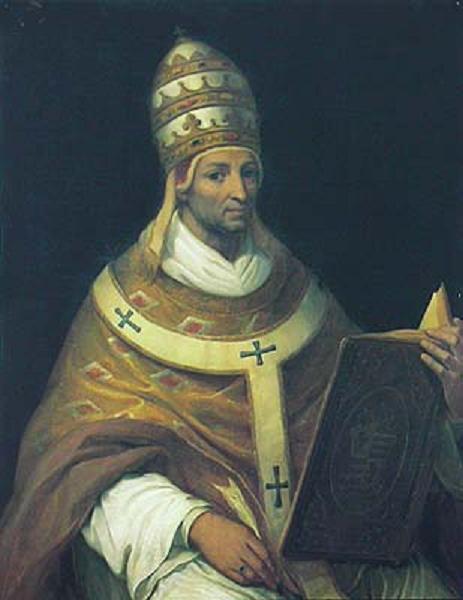
Pope John XXII
Pope John XXII

Clement’s Avignon successors (seven popes, among whom the most famous were John XXII and Benedict XII) all remained loyal to the French rulers, playing whenever necessary against the German emperor and the English, which outwardly may have been seen as an ordinary state of affairs had it not been for the fact of direct influence the French kings exercised in the curia.

Throughout the 14th century the Avignonese papacy was continuously showing signs of decline of papal authority, which was becoming increasingly undermined by the feudal monarchy. In 1312 the papacy surrendered to the will of Philp IV and dismissed the Order of the Templars, famous for its wealth, with thousands of its members accused of heresy, witchcraft, and sodomy and all its treasures confiscated by the crown.

The fiscal oppression of the curia (chiefly through control over the sale of benefices and indulgences but also over tithes and annates) became more amplified during the Avignonese papacy, despite the heavy French presence in the College of Cardinals (seven out of eight Avignonese popes and almost all of the important cardinals were Frenchmen by the middle of 14th century).


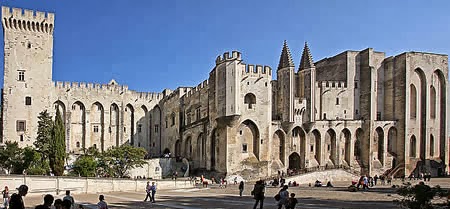
In due course the popes built themselves a fortified palace behind the walls of Avignon and lived there surrounded by luxury in the midst of magnificent artificial gardens. The luxurious lifestyle of the popes was subject to constant complaints and gossip. Contemporaries, including such important thinkers as Petrarch, Marsilius of Padua, and Catherine of Siena, relentlessly criticized the Avignonese popes.

The image of the papacy during those years changed sharply, having lost its unconditional spiritual authority and its control over the brethren. Petrarch called the Avignonese papacy “the Babylonian Captivity of the Church” and Avignon popes “wolves in shepherds’ clothing.”

The Avignonese papacy was detested by most social sectors—from peasants who suffered the ever-increasing taxation to intellectuals and theologians who wrote against the moral and spiritual degradation of the Holy Office. In the next centuries the Avignonese papacy was described as totally deprived of spirituality.

Subservience to a secular ruler, nepotism, and rapacity of the “puppet-popes” seriously undermined the reputation of papacy in the eyes of Europe, marking at the same time the end of the reign of Church Universal and the beginning of a new epoch, where ultimate power belonged with the national ruler.

The Avignon church underwent a complete makeover. Despite criticisms, almost all Avignon popes undertook serious attempts at reform. They created a sophisticated and effective administration that surpassed anything previously known in the European states. The popes’ involvement in secular politics also grew during these years, despite the forced capitulation to France.

Both developments effectively turned the church into a modern, secularized, and politicized organization. The last years of the popes’ stay at Avignon are also marked by their recurring attempts to strengthen their position in Italy.

Quite unsuccessfully they tried to turn the outcome of the revolt of Cola di Rienzo in 1347 to their favor, but even after this failure popes continued to maintain close economic and political relations with Italy. Their final success and return to Rome is indebted to the activity of Cardinal Albornoz and Pope Urban V, who gave constitution to the Papal States.

Taking advantage of the difficulties France was experiencing during the Hundred Years’ War (1337–1453), Pope Gregory XI (1370–78) transferred the papal residence back to Rome in 1378, dying just a few months after this historic reunion of the church with its ancient capital. This move, however, was attempted too late to save the papacy from disaster: Its return was blackened by the shadow of the Great Schism.

Pope Gregory XI transferred the papal residence back to Rome in 1378

Soon after Gregory XI died, the Roman people, fearing that a new pope might leave them for France once again, gathered under the walls of the conclave, demanding election of an Italian to the Holy See. Cardinals, the majority of whom were Frenchmen, chose the archbishop of Bari, a Neapolitan, Bartholomew Prignano, to be elected the next pope. He accepted the Holy Office, taking the name of Urban VI. No doubt that Prignano, who had previously held a position of a vice chancellor of the curia, seemed an excellent choice to the cardinals.

They were confident they could control the “little archbishop” (as they nicknamed their candidate), who would be grateful for this unexpected promotion. Later the cardinals would announce that they had elected Prignano under threats and for fear of the reaction of the angry mob that was raging on the streets surrounding the palace during the election.

From the very start the pontificate of the new pope was stained with a most bitter struggle with the cardinals and members of the curia of non-Italian origin. Harsh reform measures of the new pontiff, who was irritated at the slightest pretext, and physically assaulted cardinals on several occasions (publicly announcing their lifestyle of pomposity and splendor as sinful), caused the French party to flee from Rome.

Urban soon found himself at daggers drawn with everyone around him, managing to deprive the Holy See of a number of its most loyal supporters, such as Joanna, queen of Naples; her husband, Duke Otto of Brunswick; and the powerful duke of Fondi, not to mention the king of France.

Pope Clement VII
Pope Clement VII

On August 9, 1378, under a pretext that Urban’s appointment was forced, the conclave of the fugitive cardinals issued a lengthy document, entitled Declaratio, where they declared the election invalid and the Holy Office vacant. At the same sitting they unanimously voted for the Gallic cardinal Robert of Geneva, who assumed the office under the name of Clement VII (1378–94), thus becoming an “anti-pope.”

The following 40 years were characterized by almost constant warfare between pope and anti-pope, in which the Papal States were the chief playground. The schism left no one sitting on the fence. Having unparalleled impact on political allegiances, it reshaped European geopolitics, changing cultural boundaries and paving the way for the upcoming Reformation.

With every passing year the split went deeper. On the side of the “French” Pope Clement VII fought such powerful allies as the king of France, the kings of Naples and Scotland, and half of the rulers of Germany; Urban was supported by England, Portugal, and Hungary.

The legal pope continued to be tactless and inconsiderate to his allies, and gradually his authority grew weak. Appointing new cardinals to replace the rebels was not a sufficient measure to keep discipline among the supporters; constantly suspecting treachery, Urban did not hesitate to send several cardinals to be executed for “disobedience” to his will.

Isolated and defeated in most of his battles, Urban locked himself up in his castle—mainly to hide from the French king who had announced a huge prize for the pope’s head. In 1389 Urban VI came back to Rome, where he died, according to one source, surrounded by followers; according to another, he was poisoned by enemies.

Soon after Urban’s funeral it became clear that even the disappearance of one of the ruling pontiffs would not save the situation—the “Italian” party immediately appointed a successor. Thus receiving a precedent, the schism continued—Clement VII was succeeded by Benedict XIII (from 1394); Urban VI by Boniface IX (1389–1404), Innocent VII (1404–06), and Gregory XII (from 1406).

The conflict deteriorated when the Council of Pisa in 1409 deposed both Benedict XIII and Gregory XII, selecting new pope Alexander V (1409–10). The deposed popes refused to recognize the decision of the Council, and the Holy See became occupied by three popes at once.

This development was very favorable to the heretical movements that rose in large quantities all across Europe, preaching noninstitutional evangelism and unbalancing the old feudal system. Secular lords and princes who supported the establishment and the unity of the church were greatly concerned, despite the fact that the decrease in the papal authority contributed to consolidation of power in the hands of secular rulers.

The schism continued well into the 15th century, until, finally, the Council of Constance (1414–18) put an end to it, having deposed three popes at once: John XXIII (successor of Alexander V), Gregory XII, and Benedict XIII, and selecting, to the great relief of everyone involved, a single pontiff—Martin V (1417–31).
Al-Azhar

Al-Azhar
Al-Azhar

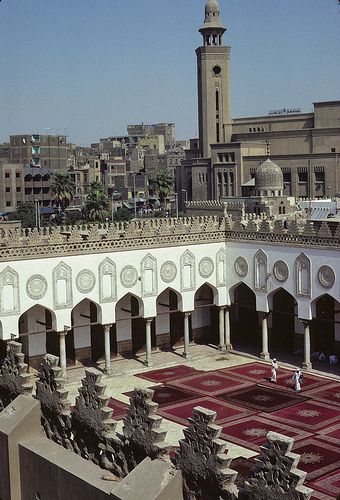
The Fatimids established al-Azhar, one of the oldest universities in the world, in Cairo in 970. Built around a large mosque with an open courtyard surrounded by columned walkways where classes were taught, al-Azhar quickly became one of the premier educational centers in the entire Islamic world, attracting students from Asia, Africa, and, in subsequent centuries, the Western Hemisphere.

Originally, the university focused on the tenets of the Isma’ili sect of Islam followed by the Fatimid rulers, but over the following centuries the university became a center for orthodox Sunni belief. By the 1600s the Shaykh al-Azhar, leader of al-Azhar, was chosen from among the shaykhs of the university.

A peek inside Al-Azhar Mosque and University
A peek inside Al-Azhar Mosque
and University nowdays
Generations of legal scholars and judges were educated in theology and Islamic law at al-Azhar. In the 15th century c.e., the Mamluk sultan Qaitbey financed the construction of an inner gate and elaborate minaret overlooking the courtyard.

Following sultans added further buildings and ornamentation to the sprawling complex, including living quarters for students, libraries, and the mosque. After the 1952 c.e. revolution in Egypt, Gamal Nasser modernized and instituted major reforms including the creation of a College of Islamic Women and the addition of colleges in medicine and engineering.

Thomas Becket (Thomas à Becket)

Thomas Becket (Thomas à Becket)

Saint Thomas Becket was the archbishop of Canterbury in England during the reign of King Henry II. He was the son of Gilbert Becket, who was born in Rouen, but became a merchant in London. Becket received an excellent education despite his middle-class origins.

He completed his degree at the University of Paris and then studied law at Bologna and Auxerre. Theobald of Bec, archbishop of Canterbury since 1139, made him deacon and assistant archbishop of Canterbury. Becket and Henry became close friends and spent considerable time together. Henry made Becket chancellor.

Theobald was seriously concerned that the trappings of the royal lifestyle would turn Becket against the needs of the church. Upon Theobald’s death in 1163, Henry offered Becket the position of archbishop of Canterbury, but he initially declined, realizing it would cause great havoc between Henry and himself.


Once Becket became archbishop in 1164, he set aside the hedonistic lifestyle, became excessively ascetic, and resigned as chancellor. His efforts focused on the church rather than on the interests of the man who had befriended and promoted him. In 1163 at the Council of Westminster, Henry passed a law that would try “criminous clerks” who had already been tried by the ecclesiastical courts.

Some of the canonical laws were ambiguous, imprecise, and contradictory, and Henry wanted clearly stated laws that would govern accurately. Becket disagreed, but withdrew his dissent when Pope Alexander III (pope from 1159 to 1181) pressured him. Henry then implemented the constitutions of Clarendon to which Becket orally agreed. The constitutions accurately reflected traditional church and state relations, which Henry II wished to guarantee.

When Becket discovered that some of the sections would reduce ecclesiastical power, he vehemently objected to the changes. However, several of the Crown’s practices were quite divergent from canon law, so that Alexander refused to assent. Becket had little choice but to admit publicly that he had committed perjury regarding the Constitution of Clarendon.

Becket was forced to appear at the Council of Northampton in October 1164 and was charged with misappropriating funds during his chancellorship. He quickly contravened the Constitutions of Clarendon, denying its jurisdiction and declaring that the church and the pope had greater jurisdiction than the Constitutions. Becket had no option but to flee abroad.

While Becket lived in exile for six years, he garnered scant support from Alexander because the pope and Henry had their own disagreements to solve. Yet both Henry and Becket went to extremes to maintain their quarrel.

The situation was exacerbated when Henry, who was quite ill, had his son and heir, Henry the Younger, (1155–83) crowned as joint king by the archbishop of York in June 1170; this was a direct violation of customary practices. Becket threatened an interdict with Alexander’s support and then aggravated the situation by suspending and excommunicating the bishops who had partaken in the coronation.

The irate Henry then uttered the phrase “Will no one rid me of this troublesome priest?” Four knights took this phrase literally, traveled to Canterbury, and murdered Becket on December 29, 1170. This event astonished and repulsed Christians everywhere. Becket was canonized three years later; his tomb became a well-visited shrine. In 1174 Henry was forced to offer penance publicly at Becket’s tomb.

Benin

kingdom of Benin
kingdom of Benin

Extending at its peak from the Niger River in the east to the port of Lagos on the western coast, Benin was a dynastic kingdom in what is now southern Nigeria, in the West African forested region. Present-day Benin City (called Ibinu; it was founded in 1180) was once where the kingdom was centered, and the modern Benin kings trace their lineage to its original dynasties.

Early southern Nigeria had been inhabited since 9000 b.c.e., with the Iron Age beginning around the second century b.c.e. Ironworking appears to have displaced Neolithic techniques without an intermediate bronze period, suggesting that iron smelting was probably introduced by outsiders, perhaps the Berbers of early antiquity.

There is little information about the first millennium c.e. in the area, other than the prosperity and subsequent disappearance from the historical record of the Nok people in what is now northeastern Nigeria. The founders of the Benin kingdom were the Bini (an ethnic subgroup of the Edo language group to which many modern inhabitants belong), but they or their ruling dynasties had a significant relationship to the Yoruba people of Ife.


According to one version of the founding of Benin, people called for the Ife prince Oranmiyan to come to their aid and displace the tyrannical rule of the Ogisos dynasty, which founded the city of Ibinu and had ruled the area for the previous few centuries or more (36 Ogiso dynastic rulers are known). Another version omits the plea for help, painting Oranmiyan as a simple invader.

At the time of the Ife incursion—whether it was invited or not—most of the power in Benin rested in the hands of the council of chiefs, the uzama. Beginning with Oranmiyan’s son Eweka (1180–1246), the uzama was presided over by the oba, a war leader who over time became a more powerful monarch with religious significance. As the oba became paramount, the kingdom became an empire.

Beginning with Ewuare (1440–73), the title of oba became a hereditary one, while Ibinu was rebuilt with military fortifications in order to protect the Benin center of power, as Ewuare’s forces expanded to conquer the lands surrounding them. The port of Lagos was established around this time, and diplomatic and trade relations began with Europe, beginning with the Portuguese. Early trade was primarily in ivory, pepper, and palm oil, before the slave trade became prominent.

The kingdom of Benin is not related to the modern day Republic of Benin, except insofar as that nation took its name in 1975 from the Bight of Benin, the bay along which both entities are or were situated.

Bantu

Bantu village
Bantu village

The Bantu people of the African continent include some 400 different ethnic groups that cover most of sub-Saharan Africa and speak a tongue from a common language group. The first time the word Bantu (meaning “people” in many Bantu languages) was used in its current sense was by Dr. Wilhelm Bleek in his book A Comparative Grammar of South African Languages (1862).

Up to that point, few linguists had tried to draw similarities between the different languages in Africa on such a wide scale. Much of what is known about Africa before the 11th century has been surmised by linguistic analysis, which, along with recent archaeology, has shown a clear picture of society and life in prehistoric Africa.

Before the spread of the Bantu much of central and southern Africa is believed to have been populated by the Khoisan-speaking people who still exist around the Kalahari Desert in modern-day Namibia and Botswana, and also in some isolated pockets of modern-day Tanzania.


There were (and still are) pygmies in Central Africa, and the northern and northeastern parts of Africa were dominated by people who spoke Afro-Asiatic languages, who have retained their identity from the Bantu. Gradually from the first millennium b.c.e. to the first millennium c.e., the Bantu spread out throughout much of the African continent.

The origins of the Bantu were first raised by Joseph H. Greenberg (1915–2001) in 1963, based on linguistic theories. Using dictionaries and work lists of these languages, he was able to isolate the 500 different distinct languages of the Bantu subgroup.

Many showed regional and geographical variations—including the names of crops and/or animals not found elsewhere in Africa— and Greenberg’s thesis was that there was an original language, which he called Proto-Bantu, from which the others were derived. As the languages spoken in the southeastern part of Nigeria, and along the border with Cameroon, contain more words similar to those used elsewhere in the continent, and that the Bantu languages spoken further away have more variations, he concluded that the Bantu had their origins along the modern-day Nigeria-Cameroon border.

Bantu
Bantu
However, the theories of Greenberg were quickly challenged by Malcolm Guthrie, whose research pointed to the Bantu language having originated in Zambia and the southern part of modernday Democratic Republic of the Congo.

If the origins of the Bantu are disputed, the reason for the migration of the Bantu throughout Africa is generally accepted. George P. Murdock (1897–1985), an American scholar, argued that it was influenced by the availability of crops. Murdock felt that it was the Bantu acquisition of crops from the East Indies—through trade with Madagascar—such as banana, taro, and yam, which helped a spread westwards from the first millennium b.c.e. onwards.

It was the cultivation of these crops, Murdock felt, that enabled the Bantu to start settling in the previously largely impenetrable tropical rain forest of central Africa, and from there southwards, establishing the civilization of Great Zimbabwe in the 10th century c.e. Others saw the migratory route, following the ideas of Greenberg, lay in the move east across the southern area of what is now the Sahara, into southern Sudan, and from there south past the Great Lakes.

If the Bantu originated in the area of southeastern Nigeria and the borders with Cameroon, they would have gradually spread eastwards to the Great Lakes, where, on Lake Victoria, the settlement of Katuruka has been dated to the fifth century b.c.e. A separate group also spread southwards through Gabon and the Congo and to modern-day Angola—the settlement at the Funa River, in modern-day Democratic Republic of the Congo, dating from 270 b.c.e.


That group gradually spread south into modern-day Angola, while the eastern migration split south of Lake Victoria, with some heading for the coast and establishing a settlement near Kwale, near Mombasa. Another group moved south, along the eastern shores of Lake Nyassa, forming the civilization of Great Zimbabwe by the 10th century c.e., with a third group heading inland, into modern-day Zambia.

The result of this migration was that, by about 1000 c.e., the Bantu dominated central and southern Africa, except for much of modern-day South Africa, Namibia, and Botswana. The survival of the Khoisan people in these places is pointed to as further evidence of this migration.

Knowledge about the divisions within Bantu tribes is known from archaeological evidence. The existence of tribal chiefs can be assumed from early settlements where wealth inequality was seen through the existence of larger and smaller residences.

Similarly the objects that were found, made from precious metals, and pots of intricate design, were too few to sustain an entire village with the view adopted by archaeologists that poorer members of Bantu tribes would have had wooden objects that have not survived. However, it is also clear that some tribes, such as the Kikuyu in modern-day Kenya, did not have hereditary chiefs but, rather, a person who assumed the role of an elder and was responsible for tax collection and family counseling.

Unlike the Khoisan and pygmies, the Bantu fought in conflicts and maintained armies. Many of the tribal chiefs maintained large numbers of wives and hence had many children who were often assimilated with commoners. The nature of the rule of the tribes has been surmised through linguistic evidence of the Bantu kinship terminology.

Although some groups, such as the Masai, use the standard patrilineal system, many others follow matrilineal traditions. In addition the Mayombe people of modern-day Democratic Republic of the Congo believe that their “blood,” and hence their descent, goes through a woman, with villagers tracing the origin of their village to an ancestress.

This is also believed to be the system used by the Bantu in the Kongo (modern-day Angola and the Democratic Republic of the Congo). As a result the chief in wartime was often the husband of the senior woman, with the government operating through the female line.

Few archaeological remains have been found of early Bantu civilization, when compared to Europe of the same period. This may have been because of the Bantu use of wood for their buildings. Some 85 million Bantu people now exist in Africa, with most divisions of the Bantu being largely linguistic.

Although the term has been used for 150 years, because of its pejorative use by the apartheid government in South Africa—whereby blacks were designated as “Bantu”—it is not used much today except as a cultural term to describe the great migration that took place in ancient and medieval Africa.

Bayezid I

Bayezid I
Bayezid I

Bayezid I was declared sultan following the death of Sultan Murad on the battlefield at Kosovo in 1389. To ensure his uncontested succession to the sultanate, Bayezid had his brother Yakub assassinated; subsequently the practice of fratricide became commonplace among heirs to the Ottoman throne.

To cement Ottoman control over Serbia, Bayezid married a Serbian royal princess. Bayezid immediately embarked on a series of successful military conquests, personally leading his troops throughout Thrace. Under Bayezid’s rule, only the heavily fortified cities on the coast, including Athens and Constantinople, remained outside Ottoman control.

Recognizing the importance of sea power in any attempt to seize Constantinople, the Ottomans began to build up their navy. Fearful of the mounting Ottoman threat, the Hungarian king and later Holy Roman Emperor Sigismund rallied Christian forces in Europe to attack the Ottomans at Nicopolis in 1396.


The Europeans were resoundingly defeated by the Ottoman troops, who were personally led on the battlefield by Bayezid who then conquered virtually all of the Balkans, the Turkoman areas of Karaman, Anatolia, and the eastern Mediterranean. Because of his military prowess, Ottoman troops called Bayezid the “thunderbolt” (yildirim).

However, Bayezid’s love of luxury and increasing arrogance alienated many of his subjects and offended many traditional Muslims. Some amirs (local governors) fled to the court of Timurlane, whose mounting power posed a serious threat to Bayezid’s conquests. In 1402 Ottoman and Mongol forces met on the battlefield at Ankara, where Bayezid was captured.

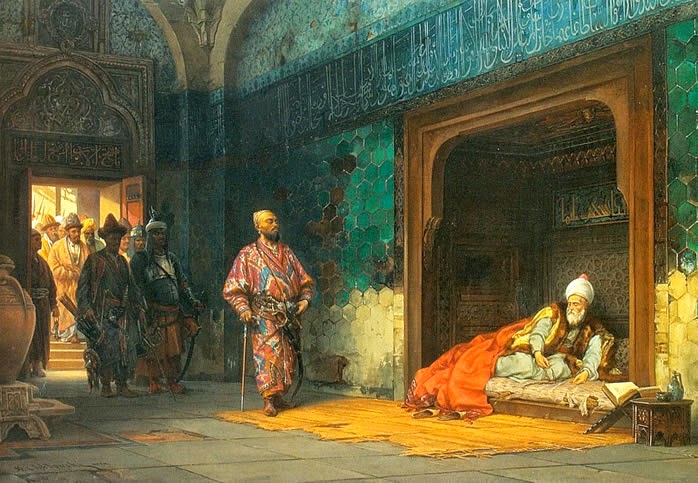
Brought before Timurlane, Bayezid was initially treated with respect, but after a failed attempt to escape, he was placed in an iron cage; he died several months later. Timurlane went on to conquer the rest of Anatolia but divided his newly gained territories among four of Bayezid’s sons. Although they pledged loyalty to Timurlane, upon his death three years later, they promptly resumed the Ottoman quest for empire.

Bayezid held by Timurlane