Showing posts with label christianity. Show all posts

Thomas Aquinas

Thomas Aquinas
Thomas Aquinas

St. Thomas Aquinas was born at Roccasecca, Italy, to Count Landulf and Countess Theodora. From early on, Thomas was diligent in his studies and had a meditative mindset. He received his education from the monastery of Monte Cassino and the University of Naples.

Thomas entered the Dominican Order and then studied in Paris from 1245 under the well-known philosopher Albertus Magnus (1195–1280). He spent 10 years visiting Italy, France, and Germany. In 1248 he lectured on the Bible at a college in Cologne, Germany. He was in Paris from 1252 c.e., eventually becoming a professor of theology and writing books.

He was awarded the degree of doctor in theology in 1257. Between 1259 and 1268 he lectured as professor in the Dominican covenants of Rome and Naples. Thomas also worked at the papal court as an adviser. He was a well-known figure by the time he came to Paris in 1269.


His intellectual inquiries about the relationship between philosophy and theology made Thomas a controversial figure. His Scholasticism made him an avid reader of works pertaining to Christian theologians, Greek thinkers, Jewish philosophy, and Islamic philosophy. Thomas wrote his first book as a commentary on Sentences, a seminal book on theology by Peter Lombard (1095–1161).

Aristotle (384–322 b.c.e.) influenced him greatly, and his comments on Sentences contained about 2,000 references to Aristotle. Critics also associate Thomas with the doctrine of Averroës (1126–98), distinguishing between knowledge of philosophy and religion. The Dominicans sent Thomas to Naples in 1272 to organize a studium generale (a house of studies).

The pope had asked him to attend the Council of Lyon on May 1, 1274, and to bring his book Contra errores Graecorum (Against the errors of the Greeks). In spite of his deteriorating health, he started the journey in January. He died on his way there on March 7, 1274, at the Cistercian abbey of Fossanova.

Cistercian abbey of Fossanova
Cistercian abbey of Fossanova where Thomas Aquinas died on March 7, 1274

In Christian theology the 13th century was an important time, as two schools of thought were raging with controversy. The Averroists separated philosophical truths from faith. They did not believe in divine revelations and believed that reason was paramount. The Augustinians gave faith the predominant position. For Thomas both reason and faith were important.

Both were complementary to each other, and the nature of their relationship did not conflict. He believed that the truths of philosophy and religion were gifts from God. The moderate realism of Thomas postulated that both the medium of thought and that of the senses led to knowledge of the intelligible world or the universal. Thomas was a sharp thinker, combining philosophical truths with theological postulations. His natural law accommodated the divine law. He synthesized Christian theology with the philosophy of Aristotle, the Stoics, and Ibn Rushd.

Thomas was a prolific writer, penning 60 works. His manuscripts were preserved in the libraries of Europe, and multiple copies came out after the invention of printing. The first published work of Thomas was Secunda Secundae (1467). The Summa Theologica, one of his best-known works, was also printed. It brought out great debate between the rational inquiry of Thomas and the Catholic doctrines.


He defended the Christian faith in Summa de veritate catholicae fidei contra gentiles (Treatise on the truth of the Catholic faith against unbelievers). In the Quaestiones disputatae (Disputed questions), he gave his opinion on various topics.

The pernicious theory that there was only one soul for all persons was refuted brilliantly in De unitate intellectus contra Averroistas. He proved in Opusculum contra errores Graecorum that the Holy Ghost proceeded from the Father and the Son. His deep knowledge of the fathers of the church was found in Catena Aurea.

Pope John XXII canonized Thomas Aquinas on July 18, 1323. In 1567 he was made a Doctor of the Church. The Summa Theologica became the standard textbook in theology in the syllabus of universities all over Europe. There was renewed interest in his writings after the papal bull of 1879.

Leo XIII, in his Providentissimus Deus (November 1893), took the principles behind his criticism of the sacred books from Thomas. St. Thomas Aquinas was the “Christian Aristotle” who wielded immense influence on future popes, universities, and academia. He combined the best of faith and reason with a careful synthesis.

Avignonese Papacy

Avignonese Papacy
Avignonese Papacy

The Avignonese papacy (1304–78) and the Great Schism (1378–1414) are regarded as two of the most dramatic events in the history of Christianity that further undermined and diminished the prestige of the papacy and the authority of the Western Latin Church.

The first episode refers to the nearly century-long pontificate of eight popes, who from the beginning of the 14th century until 1378 ruled the Christian world from the French town of Avignon, being held captive by Philip IV the Fair; because of its forced nature, the Avignonese papacy is also called the Avignonese Captivity, or Exile.

Historians attribute the cause of the Avignonese Exile of the papacy to the earlier conflict between Pope Boniface VIII and the young French king Philip the Fair in the preceding century, when the king and the pope were struggling to proclaim their rule over Europe. In the center of the conflict stood new military taxes the king levied on French monasteries, requiring new subsidies to fight his wars with the English.


Boniface rejected the king’s claims for financing his army on account of the church in the bull Clericis laicos from 1290 and later paid for his stubbornness with his own life, literally terrified to death by the king’s chancellor William of Nogaret.

Boniface’s direct successor, Benedict XI (1303–04), did not live long enough to pacify the spirits, supposedly having been poisoned by an unidentified monk; a new pope, old and gravely ill, Bertrand de Got, who assumed the name Clement V, led the papacy into exile.

Residing in France at the time of his election, weakened by what was likely cancer, and discouraged by the fate of his predecessor, Clement V capitulated to Philip’s demands that he should be crowned at Lyon. He established the tradition of the Avignonese papacy, never setting foot in the ancient city of Rome.
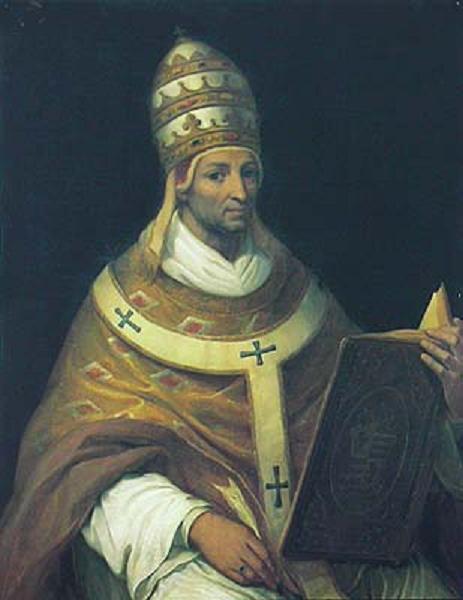
Pope John XXII
Pope John XXII

Clement’s Avignon successors (seven popes, among whom the most famous were John XXII and Benedict XII) all remained loyal to the French rulers, playing whenever necessary against the German emperor and the English, which outwardly may have been seen as an ordinary state of affairs had it not been for the fact of direct influence the French kings exercised in the curia.

Throughout the 14th century the Avignonese papacy was continuously showing signs of decline of papal authority, which was becoming increasingly undermined by the feudal monarchy. In 1312 the papacy surrendered to the will of Philp IV and dismissed the Order of the Templars, famous for its wealth, with thousands of its members accused of heresy, witchcraft, and sodomy and all its treasures confiscated by the crown.

The fiscal oppression of the curia (chiefly through control over the sale of benefices and indulgences but also over tithes and annates) became more amplified during the Avignonese papacy, despite the heavy French presence in the College of Cardinals (seven out of eight Avignonese popes and almost all of the important cardinals were Frenchmen by the middle of 14th century).


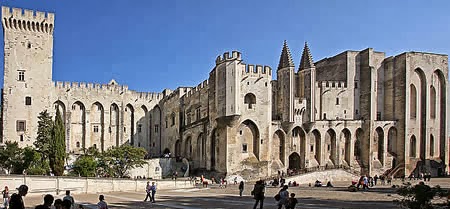
In due course the popes built themselves a fortified palace behind the walls of Avignon and lived there surrounded by luxury in the midst of magnificent artificial gardens. The luxurious lifestyle of the popes was subject to constant complaints and gossip. Contemporaries, including such important thinkers as Petrarch, Marsilius of Padua, and Catherine of Siena, relentlessly criticized the Avignonese popes.

The image of the papacy during those years changed sharply, having lost its unconditional spiritual authority and its control over the brethren. Petrarch called the Avignonese papacy “the Babylonian Captivity of the Church” and Avignon popes “wolves in shepherds’ clothing.”

The Avignonese papacy was detested by most social sectors—from peasants who suffered the ever-increasing taxation to intellectuals and theologians who wrote against the moral and spiritual degradation of the Holy Office. In the next centuries the Avignonese papacy was described as totally deprived of spirituality.

Subservience to a secular ruler, nepotism, and rapacity of the “puppet-popes” seriously undermined the reputation of papacy in the eyes of Europe, marking at the same time the end of the reign of Church Universal and the beginning of a new epoch, where ultimate power belonged with the national ruler.

The Avignon church underwent a complete makeover. Despite criticisms, almost all Avignon popes undertook serious attempts at reform. They created a sophisticated and effective administration that surpassed anything previously known in the European states. The popes’ involvement in secular politics also grew during these years, despite the forced capitulation to France.

Both developments effectively turned the church into a modern, secularized, and politicized organization. The last years of the popes’ stay at Avignon are also marked by their recurring attempts to strengthen their position in Italy.

Quite unsuccessfully they tried to turn the outcome of the revolt of Cola di Rienzo in 1347 to their favor, but even after this failure popes continued to maintain close economic and political relations with Italy. Their final success and return to Rome is indebted to the activity of Cardinal Albornoz and Pope Urban V, who gave constitution to the Papal States.

Taking advantage of the difficulties France was experiencing during the Hundred Years’ War (1337–1453), Pope Gregory XI (1370–78) transferred the papal residence back to Rome in 1378, dying just a few months after this historic reunion of the church with its ancient capital. This move, however, was attempted too late to save the papacy from disaster: Its return was blackened by the shadow of the Great Schism.

Pope Gregory XI transferred the papal residence back to Rome in 1378

Soon after Gregory XI died, the Roman people, fearing that a new pope might leave them for France once again, gathered under the walls of the conclave, demanding election of an Italian to the Holy See. Cardinals, the majority of whom were Frenchmen, chose the archbishop of Bari, a Neapolitan, Bartholomew Prignano, to be elected the next pope. He accepted the Holy Office, taking the name of Urban VI. No doubt that Prignano, who had previously held a position of a vice chancellor of the curia, seemed an excellent choice to the cardinals.

They were confident they could control the “little archbishop” (as they nicknamed their candidate), who would be grateful for this unexpected promotion. Later the cardinals would announce that they had elected Prignano under threats and for fear of the reaction of the angry mob that was raging on the streets surrounding the palace during the election.

From the very start the pontificate of the new pope was stained with a most bitter struggle with the cardinals and members of the curia of non-Italian origin. Harsh reform measures of the new pontiff, who was irritated at the slightest pretext, and physically assaulted cardinals on several occasions (publicly announcing their lifestyle of pomposity and splendor as sinful), caused the French party to flee from Rome.

Urban soon found himself at daggers drawn with everyone around him, managing to deprive the Holy See of a number of its most loyal supporters, such as Joanna, queen of Naples; her husband, Duke Otto of Brunswick; and the powerful duke of Fondi, not to mention the king of France.

Pope Clement VII
Pope Clement VII

On August 9, 1378, under a pretext that Urban’s appointment was forced, the conclave of the fugitive cardinals issued a lengthy document, entitled Declaratio, where they declared the election invalid and the Holy Office vacant. At the same sitting they unanimously voted for the Gallic cardinal Robert of Geneva, who assumed the office under the name of Clement VII (1378–94), thus becoming an “anti-pope.”

The following 40 years were characterized by almost constant warfare between pope and anti-pope, in which the Papal States were the chief playground. The schism left no one sitting on the fence. Having unparalleled impact on political allegiances, it reshaped European geopolitics, changing cultural boundaries and paving the way for the upcoming Reformation.

With every passing year the split went deeper. On the side of the “French” Pope Clement VII fought such powerful allies as the king of France, the kings of Naples and Scotland, and half of the rulers of Germany; Urban was supported by England, Portugal, and Hungary.

The legal pope continued to be tactless and inconsiderate to his allies, and gradually his authority grew weak. Appointing new cardinals to replace the rebels was not a sufficient measure to keep discipline among the supporters; constantly suspecting treachery, Urban did not hesitate to send several cardinals to be executed for “disobedience” to his will.

Isolated and defeated in most of his battles, Urban locked himself up in his castle—mainly to hide from the French king who had announced a huge prize for the pope’s head. In 1389 Urban VI came back to Rome, where he died, according to one source, surrounded by followers; according to another, he was poisoned by enemies.

Soon after Urban’s funeral it became clear that even the disappearance of one of the ruling pontiffs would not save the situation—the “Italian” party immediately appointed a successor. Thus receiving a precedent, the schism continued—Clement VII was succeeded by Benedict XIII (from 1394); Urban VI by Boniface IX (1389–1404), Innocent VII (1404–06), and Gregory XII (from 1406).

The conflict deteriorated when the Council of Pisa in 1409 deposed both Benedict XIII and Gregory XII, selecting new pope Alexander V (1409–10). The deposed popes refused to recognize the decision of the Council, and the Holy See became occupied by three popes at once.

This development was very favorable to the heretical movements that rose in large quantities all across Europe, preaching noninstitutional evangelism and unbalancing the old feudal system. Secular lords and princes who supported the establishment and the unity of the church were greatly concerned, despite the fact that the decrease in the papal authority contributed to consolidation of power in the hands of secular rulers.

The schism continued well into the 15th century, until, finally, the Council of Constance (1414–18) put an end to it, having deposed three popes at once: John XXIII (successor of Alexander V), Gregory XII, and Benedict XIII, and selecting, to the great relief of everyone involved, a single pontiff—Martin V (1417–31).

Bernard of Clairvaux

Bernard of Clairvaux

Saint Bernard of Clairvaux was born in 1090 in Fontaine (now a suburb of Dijon in Burgundy, France) of noble parents: Tescelin, a relative of the lord of Châtillon, and Aleth, daughter of the lord of Montbard. His five brothers trained for military careers, but Bernard had fragile health and enrolled in the religious institute of Saint-Vorles (at Châtillon) for instruction leading to an ecclesiastical profession.

He studied there for 10 years. Hesitating about his future, he finally decided to embrace the monastic life. Even before he entered the monastery, he convinced many relatives and friends to join him in the preparation for religious calling.

He entered the abbey of Cîteaux (close to Dijon) in 1113. The so-called New Monastery had been founded 15 years before by former Benedictine monks from Molesme, eager to follow the Rule of Saint Benedict more authentically. Cîteaux is the cradle of the Cistercian Order.


Two years later the abbot sent Bernard to be the founding superior of a new monastery, Clairvaux, in the region of Champagne. It rapidly became economically and spiritually prosperous. Bernard’s zeal attracted many young people, and Clairvaux counted more than 60 foundations or affiliated religious communities at his death.

This success disturbed some more conservative monks and involved Bernard in a controversy with the Benedictine abbey of Cluny. Advised by his close Benedictine friend and first biographer William of Saint-Thierry, he wrote the Apology to defend the Cistercian reform.

Renowned as a reformer, he was often invited by councils bishops to help carry out policies of ecclesial change within the church. Civil authorities even consulted Bernard to find solutions that would bring peace and justice. In 1130, as the church faced a major crisis with the election of two popes, he was consulted about a way to reunite the church.

Innocent II, the pope confirmed instead of Anacletus II, then asked Bernard to accompany him throughout Europe and to consolidate the church by his skillful preaching. For eight years he served in this way. Meanwhile, he remained abbot of Clairvaux and kept on writing major spiritual works, especially his 86 Sermons on the Song of Songs.

In the last period of his life he was involved in various ecclesial forays. He formally criticized the writings of the theologians Peter Abelard and Arnold of Brescia at the Council of Sens (1140), leading to their judicially questionable censure. He also participated in Gilbert de la Porée’s condemnation in 1141.

He defended the church against heretics. He preached on the eve of the Second Crusade at Vézelay in 1146. In spite of his powerful spiritual message and appeal to inner conversion, the crusade was a total failure and left Bernard embittered.

He died on August 20, 1153, and was recognized as a saint 21 years later. In 1830 he was declared a Doctor of the Church. Apart from his many treatises and sermons overflowing with biblical references, more than 300 of his letters are extant. His spiritual influence has been constant and extensive, even touching the Protestant reformer Martin Luther (1483–1546). His message inspires many scholars and religious teachers to this day.

Boniface

Boniface
Boniface

Known as the Apostle of the Germans, Saint Boniface was educated in England under the influence of Benedictine monasteries in the late seventh century. He could have followed in the steps of the Venerable Bede, so polished was his Latin, but the monks instilled in him a zeal for spreading the Christian faith to the European continent, in the throes of the Dark Ages. He, along with many Anglo-Saxon and Irish missionaries, brought back to Europe a semblance of religion, education, and culture before the emergence of Charlemagne and the Holy Roman Empire.

His missionary career had three phases, punctuated by visits to Rome for consultation and patronage. First, the pope delegated him for work over a broad area, and he targeted Frisia, Hesse, and Thuringia (719–735). Second, he received a special papal commission to penetrate Germany, and he concentrated on Bavaria for establishing monasteries (738–742).

Third, he settled in the western part of the Frankish territory (742–747), where he organized the church and encouraged accountability and training for its leaders. As an old man, he retired from his official duties and pioneered again as a simple missionary to Frisia on the German coast of the North Sea. Here he encountered fierce opposition from the natives, who martyred him along with 53 of his companions in 754.


Early on in his career (722) he gained advantages for his missionary program because of Charles Martel and his line. He had won their guarantees for safety during a time of constant invasion and terrorism by marauding tribes. In his initial work in Frisia legend has it that he cut down the sacred oak tree of Thor, and when no adverse reaction occurred, the locals flocked to him.

One of his most famous monasteries was the Abbey of Fulda, founded to consolidate the gains he had made in Bavaria. Fulda was put directly under the pope, and for centuries it was the center of German religious and intellectual life. Here Boniface’s body was transported and buried. It is the site for the German Conference of Catholic Bishops.

Boniface epitomizes the return of civilization to Europe in several respects. First, he represents centralized discipline and accountability by his emphasis on unity with the Roman pontiff. It must be remembered that the people had long since seen the demise of the Roman Empire, and there was as yet no overarching political structure to unite the disparate towns and regions.

Second, he represents culture by his embracing the Benedictine ideals of literacy and art in all of his monasteries. Again, the classical notion of the “good life” had been defunct for many generations, and the output of literary compositions and visual art had diminished considerably.

Third, he believed that all of his clergy must be educated. Boniface had to drive out rustic church leaders so that the Continental church could cooperate with his bishops and pope. In addition he set up institutions for women, who throughout this period had been denied the privileges of men, and he made education available.

In his home country of England, it was the custom to train convent leaders (abbesses) to appreciate books and music and art so that they could run their own communities of women. This practice spilled over into Boniface’s mission land of Germany.

Caesaropapism

Caesaropapism
Caesaropapism

Caesaropapism is the idea that the emperor had complete control over the Orthodox Greek Church in the Roman/Byzantine Empire, relegating the church to something like a department of state, subordinate to, rather than independent from, imperial power.

This is a western perspective never found in Byzantine sources. In the Byzantine/Orthodox perspective there was, ideally, a harmony between emperor/imperial power (imperium) and church/ecclesiastical power (sacerdotium), not a domination and subordination, respectively.

The relationship of church and Roman state changed drastically after the conversion of Emperor Constantine the Great (d. 337). Up to this time Christianity had been a persecuted minority sect far from the wealth and power of the imperial palace and Roman aristocracy.


By that time the church had developed a strong and effective organizational structure and leadership as well as a means of regulating problems (though these did not always prove successful) through local councils. After Constantine’s conversion the church was raised to a new level of affluence and power, as bishops now became figures of wealth and influence. Imperial patronage of the church also meant imperial involvement in the church and, conversely, church involvement in politics.

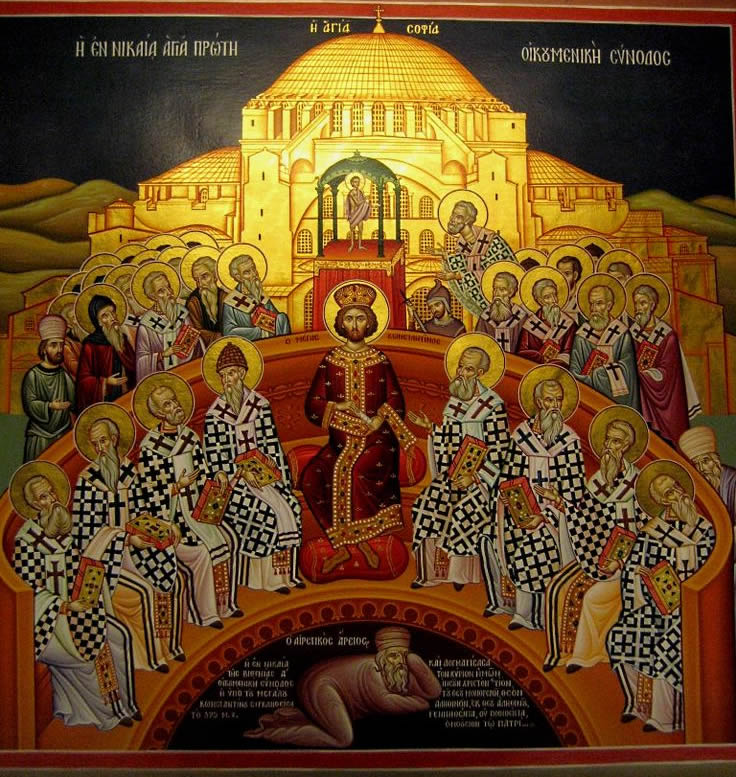
The emperor was constantly concerned to ensure peace in the church and took action when theological controversies threatened to rend it into competing factions because these quickly devolved into quasi-political factions. The emperor did not decide such controversies unilaterally. Instead, he relied on the church. The emperor, starting with Constantine I, summoned all bishops together to an ecumenical (“universal”) council where they could officially establish Orthodox doctrine and practice.

The Orthodox Church recognizes seven such councils (Council of Nicaea, 325; Council of Constantinople, 381; Councils of Ephesus and Chalcedon, 431, 451; Constantinople, 551; Constantinople, 680; Nicaea, 787). Nevertheless, these councils did not always lead to harmony, since those condemned often broke away (like Monophysites in Syria and Egypt after the Fourth Ecumenical Council).

Emperor in christian council

In the later fourth century Emperor Theodosius I (d. 395) proclaimed the Orthodox Christian faith the only legal religion of the empire. Afterwards, adherence to the Orthodox theology of the emperor was the measuring stick for loyalty and citizenship in the empire. Church and state in Byzantium were thoroughly intertwined.

The emperor’s power was perceived as granted by God and visibly shown by his coronation at the hands of the patriarch in the great cathedral of Hagia Sophia. The emperor demonstrated his God-given duty by promoting Christianity, protecting the church, and enforcing its regulations. The emperor’s role in the church continued beyond calling ecumenical councils.

He also selected the patriarch of Constantinople, the leading cleric in the Orthodox Church. Usually the emperor selected him from a short list provided by a synod of clergy, but he could also choose another candidate altogether. Sometimes in fact, he chose a layperson, as he did with the ninth-century Patriarch Photius.


The emperor acted as an overseer of the church and was granted special privileges. He could enter the sanctuary (the area that is today behind the iconostasis), which was reserved only for clerics. He could also receive communion in the same fashion as priests. In addition, the emperor could preach sermons, as did Emperor Leo VI (d. 912), and bless the congregation.

He also enacted legislation regulating church activities and even, at times, on theology. The emperor could not, however, celebrate the Divine Liturgy; that was reserved only for ordained clergy. Here was one area distinguishing imperial (imperium) and the clerical power (sacerdotium). Yet, as is clear, in Byzantium, church and state were linked together in an inseparable fashion.

There was no clear-cut distinction between the impact of canon (kanon) and civil (nomos) law on the Byzantine community. In the 12th century canonist Theodore Balsamon declared that the emperor regulated both civil and canon law and argued that the emperor himself was not limited by canon law. Yet, this was only in theory.

In reality, the emperor was indeed limited in his control over orthodoxy. While he could remove bishops and appoint their replacements, he answered to the church. When the popular patriarch John Chrysostom was removed in the early fifth century, the rioting in Constantinople burned whole regions of the city. Moreover, the emperor could not permanently alter doctrine without the support of the church and especially the great defenders of orthodoxy, monks.

In the seventh century emperors championed the doctrine of Monotheletism (which asserted that Christ had only one will for both his divine and human nature); despite their efforts it failed, because of the opposition clergy and monks, like Maximus. In the eighth and ninth centuries the controversy over iconoclasm was driven by the imperial palace and opposed fiercely by monks like John Damascene and Theodore the Stoudite.

This too failed. In the 10th century, Emperor Nikephoros Phokas wanted the church to recognize as martyrs all Christians who died fighting Muslims. The patriarch rejected this. In the 11th century, tension between the bishops of Rome (of the Latin Church) and Constantinople (of the Greek Church) led to the Schism of 1054 that separated the Catholic and the Orthodox Churches—despite imperial efforts to prevent it.

In the 13th–15th centuries Byzantine emperors, desperate for military support from the west, attempted to submit the Orthodox Church to the papacy (at the Council of Lyons in 1274 and the Council of Florence in 1438–1939) but were foiled by monks and clerics unwilling to yield theologically. While the emperor had a level of practical power, this power was checked by the tradition of the church and by the unyielding commitment to principle of monastic and clerical defenders.

Finally, despite the name (Caesaropapism) emperors never claimed to have the authority over the church as the pope, the bishop of Rome, did in the west. Despite the power of the emperor, he did not have complete control over the church, as the word implies. He was not pope and emperor of the Orthodox Church.